Falls From Height Are Still the No.1 Killer at Work: Safer Ways to Clean Hard-to-Reach Areas
Posted on October 22, 2026
TL;DR – the short answer
Falls from height were the most common cause of fatal injury to workers in Great Britain in 2025/26, accounting for 31 of 126 deaths, around a quarter, according to HSE. The Work at Height Regulations 2005 set a simple order of priorities: avoid work at height where you reasonably can, prevent falls where you can’t, and minimise the distance and consequences of any fall that could still happen. For cleaning, that usually means ground-based methods first and properly planned powered access second.
On 1 July 2026, the Health and Safety Executive (HSE) published its annual figures on work-related deaths. The headline was positive: 126 workers were killed in 2025/26, which HSE describes as provisionally the lowest number on record outside the pandemic years [1]. But one finding hasn’t changed in years. Falls from height remain the single biggest killer.
Cleaning and facilities work involves a lot of height: windows and atriums, high-level ductwork, warehouse racking, signage, gutters and light fittings. This article looks at what the latest numbers say, what the law requires, and the practical ways to keep people safe when the job is above head height.
31
Workers killed by falls from height in 2025/26, around a quarter of all worker deaths
Source: HSE, 2026
8%
of employee non-fatal injuries reported under RIDDOR in 2024/25 were falls from height
Source: HSE, 2025
40
Worker deaths among those aged 60+ in 2025/26, despite being 12% of the workforce
Source: HSE, 2026
What do the latest falls from height statistics show?
126 worker deaths in work-related incidents in Great Britain, an all-industry rate of 0.37 per 100,000 workers.
Falls from a height (31) were the most common cause, around a quarter of the total.
Construction (25 deaths) had the highest number of any industry, followed by agriculture, forestry and fishing (22).
Workers aged 60 and over accounted for around a third of deaths (40), despite making up just 12% of the workforce.
Non-fatal falls matter too. HSE’s 2024/25 summary statistics show 59,219 employee non-fatal injuries reported by employers under RIDDOR, with falls from a height accounting for 8% and slips, trips or falls on the same level for 30% [2]. Across all workers, an estimated 680,000 suffered a self-reported non-fatal injury at work in 2024/25 [2].
Plain-English definition: HSE defines work at height as work in any place where, if no precautions were taken, a person could fall a distance liable to cause personal injury. Examples include working on a ladder or flat roof, or anywhere you could fall through a fragile surface or into an opening [3].
What do the Work at Height Regulations 2005 require?
The Work at Height Regulations 2005 (WAHR) apply to all work at height where there is a risk of a fall liable to cause injury. HSE’s brief guide, INDG401, says their purpose is to prevent death and injury from a fall, and sets out a clear hierarchy for duty holders [3]:
Hierarchy summarised from HSE INDG401, Working at height: A brief guide.
Priority
What HSE says
Cleaning example
1. Avoid
Avoid work at height where it is reasonably practicable to do so
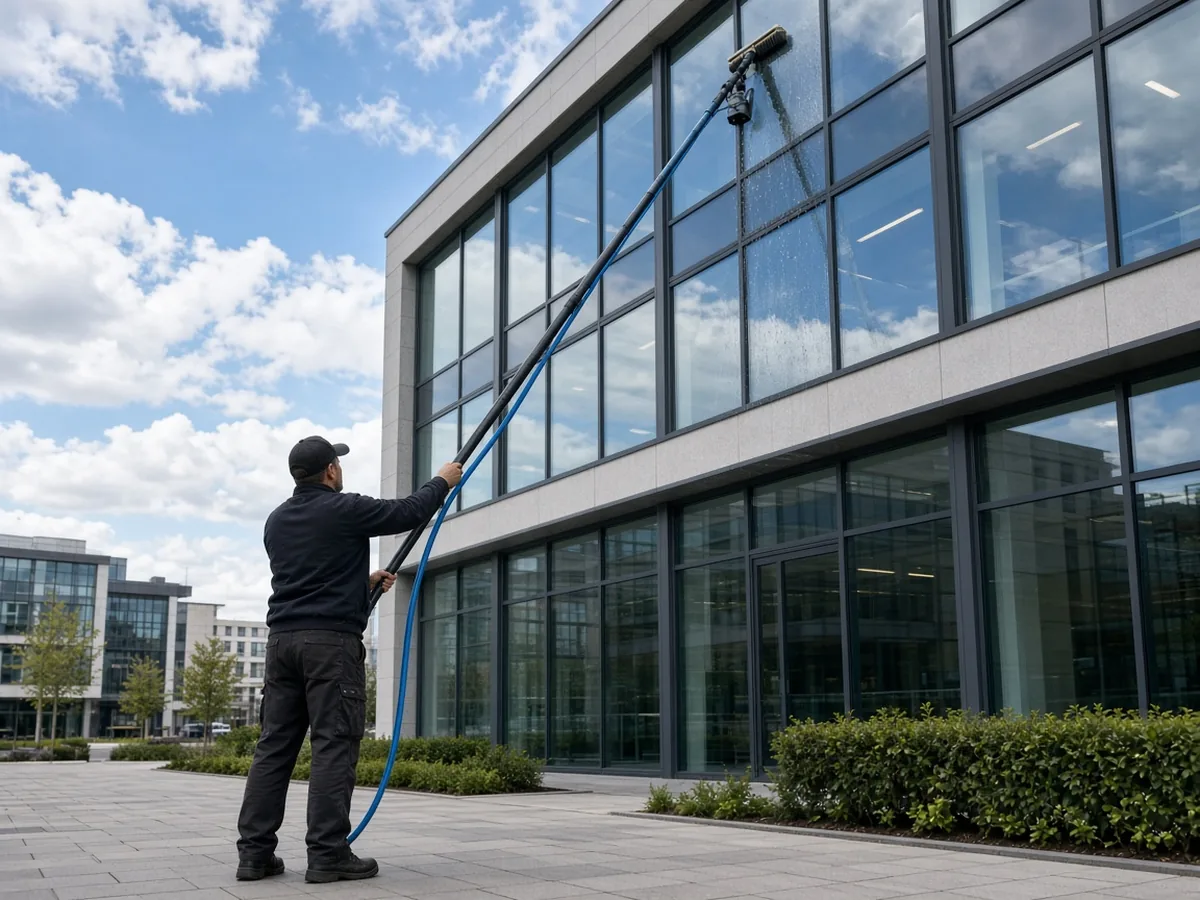
Clean upper-floor glazing with a water-fed pole from the ground; use extension tools for low-level high dusting
2. Prevent
Where it can’t be avoided, prevent falls using an existing safe place of work or the right type of equipment
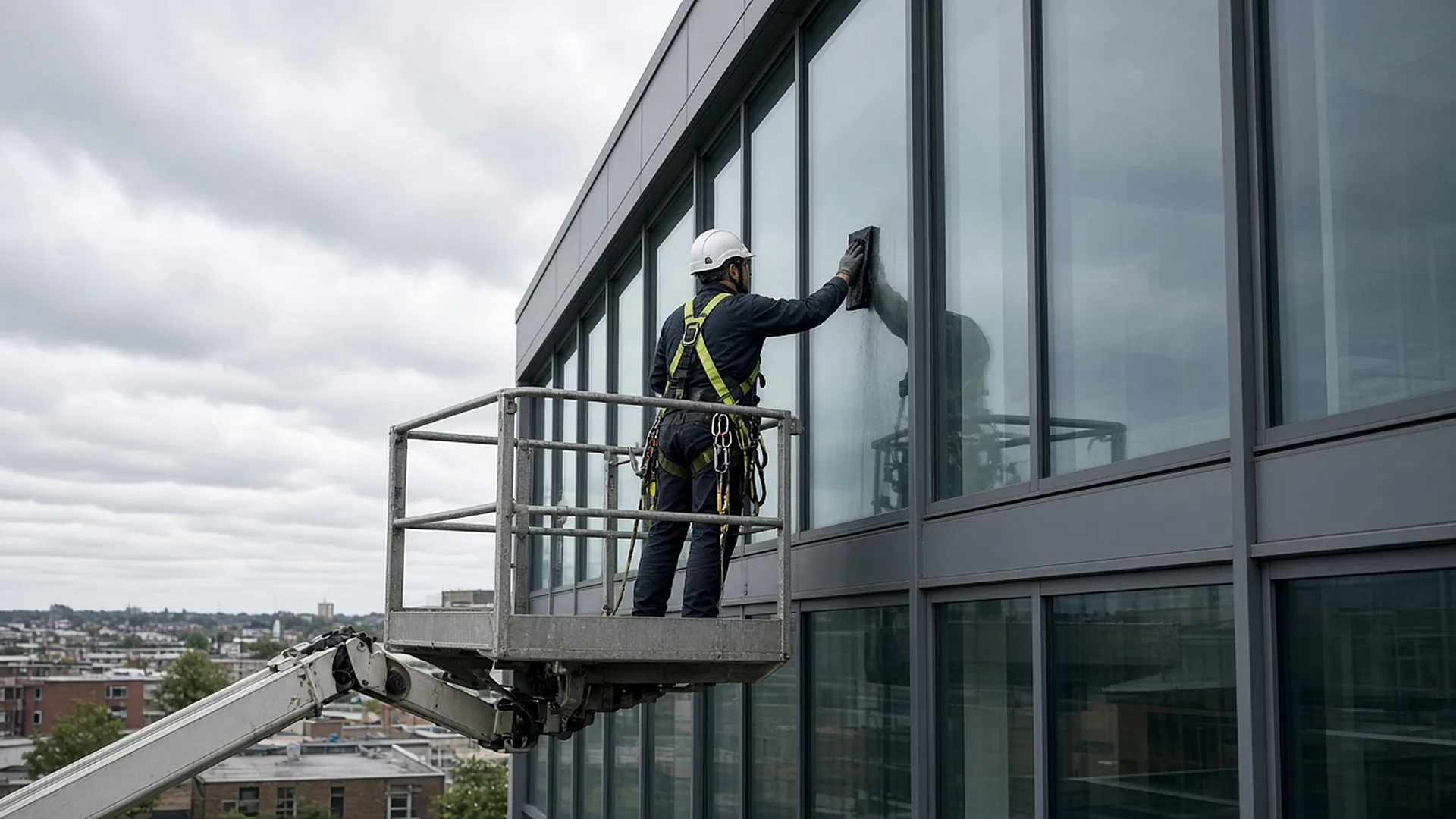
Use a MEWP or scissor lift with guard rails, or a tower scaffold with edge protection
3. Minimise
Minimise the distance and consequences of a fall with the right type of equipment where the risk cannot be eliminated
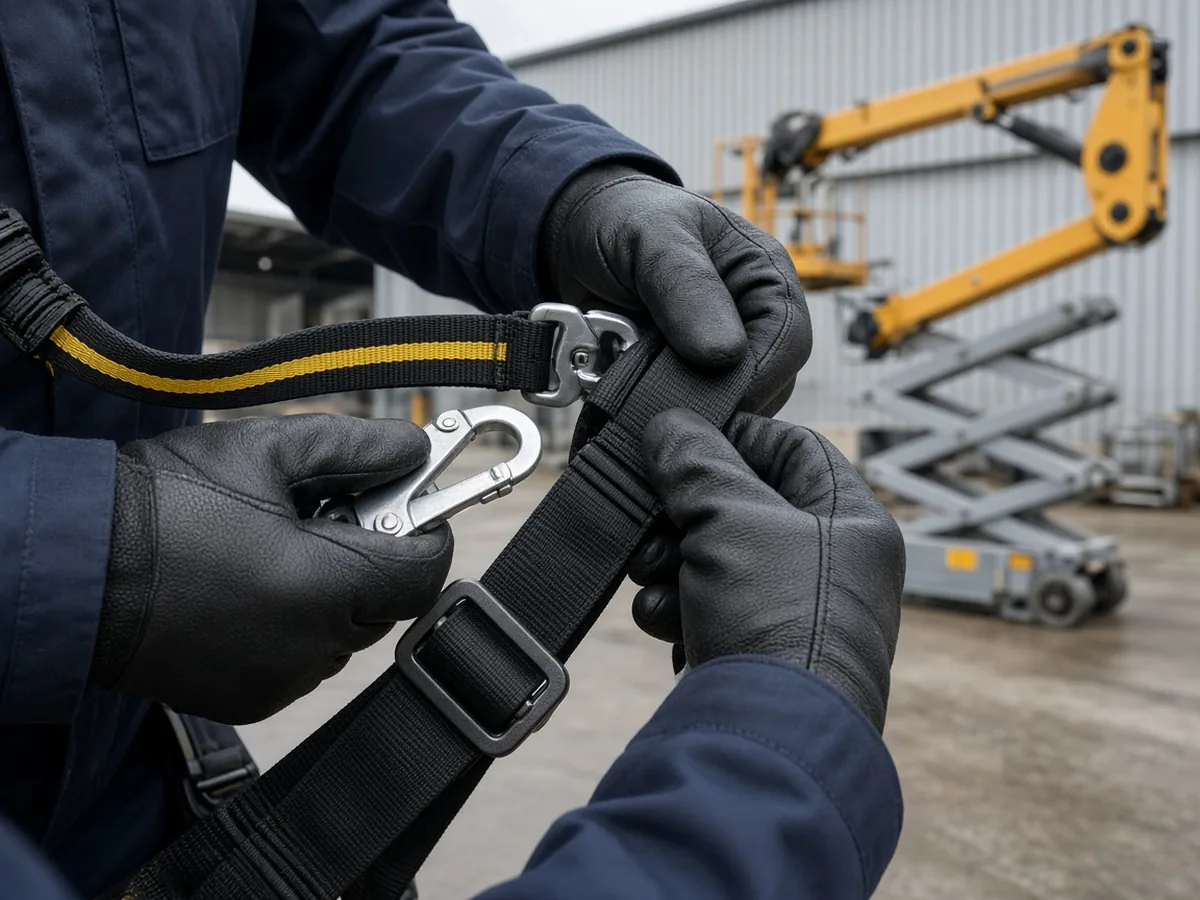
Use fall-arrest or work-restraint systems and soft landing measures where appropriate
INDG401 also lists practical expectations: do as much work as possible from the ground; make sure workers can get safely to and from where they work at height; make sure equipment is suitable, stable and strong enough for the job, and maintained and checked regularly; don’t overload or overreach; take precautions on or near fragile surfaces; protect people from falling objects; and plan emergency evacuation and rescue [3].
Are ladders banned for cleaning?
No. HSE explicitly says that ladders and stepladders being banned is a common misconception[3]. They can be the sensible choice for low-risk, short-duration tasks, as long as they are the right type, in good condition and used by someone trained to use them. What HSE expects is that the choice is justified by the risk assessment, not made out of habit.
For most commercial cleaning tasks above the first floor, however, there are now safer and often quicker alternatives.
What are the safer ways to clean hard-to-reach areas?
Water-fed pole systems for glazing
Water-fed poles use purified water pumped through a telescopic carbon-fibre pole, so operatives can clean glazing several storeys up while staying on the ground. This is the clearest example of “avoid” in action, and the standard approach for routine external glazing maintenance on low- and mid-rise buildings.
Powered access (MEWPs and scissor lifts)
Where people do need to be at height, for example to clean atrium glazing, high-level ductwork, warehouse racking tops or signage, a mobile elevating work platform with guard rails provides a stable, protected place to work. Operators should be trained and familiar with the specific machine, and the platform should be inspected and maintained in line with the relevant equipment regulations.
Extension tools for high-level dusting
Telescopic high-reach vacuums and dusting tools let operatives clean light fittings, vents and ledges up to several metres from the floor without leaving the ground.
Rope access and specialist methods
For tall or complex structures, rope access by certified technicians, or building maintenance units where fitted, may be the right answer. These need specialist planning and rescue arrangements.
Before anyone works at height: a quick pre-task check
✓Can this task be done from the ground with extension tools or water-fed poles?
✓Is there a written risk assessment and method statement specific to this task and location?
✓Is the access equipment right for the job, inspected and in date?
✓Are the operatives trained and competent for this equipment (for example, IPAF for powered access)?
✓Have fragile surfaces, roof lights and openings been identified and protected?
✓Has the weather, especially wind and rain, been checked and is there a stop-work threshold?
✓Is there an exclusion zone below, and a rescue plan if someone is left suspended?
✓Is the work properly supervised, with lone working avoided?
Why does an ageing workforce change the picture?
HSE’s finding that workers aged 60 and over accounted for around a third of deaths while making up only 12% of the workforce [1] is a reminder to consider individual capability in risk assessments. Facilities and cleaning workforces often include experienced older operatives. Matching tasks to people, and preferring ground-based methods, protects everyone.
Who is responsible when a contractor works at height on your site?
Responsibility is usually shared. The contractor controls how the work is done, but the client or building occupier has duties too: providing information about the premises (such as fragile roofs or anchor points), co-operating and co-ordinating with the contractor, and choosing a competent contractor in the first place. Asking for accreditations, training records and task-specific method statements before work starts is good practice. At Prime Facility Services, our teams hold IPAF and IOSH training and we work to ISO 9001 and Safecontractor-accredited systems.
How Prime Facility Services cleans at height without cutting corners
Safe access is built into how we work. Prime Facility Services is an owner-managed company with over 20 years in commercial and industrial cleaning, based in Telford with a second office in Dudley. All our staff are insured, checked and audited under ISO, IPAF, Safecontractor and IOSH. We have held ISO 9001 and ISO 14001 since 2010 and Safecontractor since 2013.
We use the reach-and-wash system, which feeds pure water up a lightweight pole, unless the windows cannot be reached that way. Then we use mobile elevated platforms or trained rope access staff. Our procedures, risk assessments and method statements are audited by SafeContractor and ISO 9001.
A risk assessment is completed before any high-level job begins. Operatives need IPAF and PASMA training to use scissor lifts, and our managing director does not permit the team to take shortcuts.
Roof, gutter and high-level inspections carried out by drone, with a digital video report, without the need for scaffolding or elevated work platforms.
Falls from height caused 31 of 126 worker deaths in 2025/26, around a quarter, and remain the top cause (HSE).
Falls from height made up 8% of employee non-fatal injuries reported under RIDDOR in 2024/25.
WAHR 2005 hierarchy: avoid, then prevent, then minimise.
Ladders aren’t banned, but they must be justified by the risk assessment.
Water-fed poles, extension tools and guard-railed powered access cut risk for most cleaning tasks.
Frequently asked questions
What is the most common cause of fatal injuries at work in the UK?
Falls from height. HSE figures for 2025/26 show 31 of the 126 worker deaths in Great Britain were caused by falls from a height, around a quarter of the total.
What is the hierarchy under the Work at Height Regulations 2005?
Avoid work at height where reasonably practicable; where it can’t be avoided, prevent falls using a safe place of work or suitable equipment; and minimise the distance and consequences of a fall where the risk remains.
Are ladders banned under the Work at Height Regulations?
No. HSE says this is a common misconception. Ladders and stepladders can be used for low-risk, short-duration tasks when the risk assessment shows they are the right choice.
What counts as working at height?
HSE defines it as work in any place where, without precautions, a person could fall a distance liable to cause personal injury. That includes working on ladders, roofs, platforms or near openings.
How can windows be cleaned without working at height?
Water-fed pole systems let operatives clean glazing several storeys up from the ground, which avoids work at height for many low- and mid-rise buildings.
What percentage of workplace injuries are falls from height?
Falls from a height accounted for 8% of employee non-fatal injuries reported by employers under RIDDOR in 2024/25, according to HSE.
Should a cleaning contractor give me a method statement for work at height?
Yes. Before anyone works at height on your site, ask for a risk assessment and method statement showing the access equipment and training involved. Prime Facility Services’ window cleaning procedures, risk assessments and method statements are audited by SafeContractor and ISO 9001. Call 0800 566 8894 to discuss your building.
Winter Norovirus and Flu: How to Prevent Outbreaks in the Workplace
Last winter, norovirus reports in England peaked at 627 a week in January, and flu took off in late October. Here’s how norovirus and flu spread at work, why hand gel isn’t enough, and the cleaning steps that make the biggest difference.
Daytime Cleaning and Energy Bills: Can Changing Your Cleaning Schedule Cut Building Costs?
Non-domestic electricity averaged 24.51p per kWh in Q2 2026, and lighting alone accounts for 15.5% of office electricity use. Moving cleaning into the working day can cut the hours a building runs. Here’s how to work out whether it adds up for you.
Void Turnaround Times: Why Every Day Empty Costs Housing Providers
The median social home in England now stands empty for 30 days between tenancies, up from an average of 21 days before the pandemic. Here’s what the latest government and regulator data says about void times, rent loss and demand, and where days can be won back.
National Standards of Healthcare Cleanliness 2025 Explained for GP Surgeries and Dental Practices
The National Standards of Healthcare Cleanliness 2025 replaced the 2021 version and apply to all healthcare organisations. Here’s what functional risk categories, audit target scores and star ratings mean for a GP surgery or dental practice.