Winter Norovirus and Flu: How to Prevent Outbreaks in the Workplace
Posted on October 22, 2026
TL;DR – the short answer
To prevent norovirus in the workplace, rely on soap and water, not alcohol gel, step up cleaning of shared touchpoints, and use a bleach-based disinfectant (1,000 ppm chlorine) once surfaces have been cleaned. Ask anyone with vomiting or diarrhoea to stay off until 48 hours after symptoms stop. For flu, add fresh air, tissues and vaccination. Both viruses are at expected levels in mid-October 2026, but last winter norovirus reports peaked at 627 a week in January (UKHSA).
Every winter, the same pattern plays out in offices, factories and warehouses across the UK. One person comes in feeling “a bit off”, a shared kettle or door handle does the rest, and within days a team is down to half strength. Norovirus and flu spread in different ways, so a single “wipe everything down” approach often falls short.
This guide covers where both viruses stand as winter 2026 to 2027 begins and the cleaning steps that make the biggest difference.
627
Peak weekly positive norovirus laboratory reports in England last winter (week beginning 12 January 2026)
Source: UKHSA, 2026
39.7%
How far 2025 to 2026 norovirus reports were above the 5-season average (13,430 reports)
Source: UKHSA, 2026
78%
Share of organisations naming minor illness, such as colds, flu and stomach upsets, among their top three causes of short-term absence
Source: CIPD, 2025
Where are norovirus and flu levels right now?
UKHSA’s latest norovirus report, published on 15 October 2026, says activity “has varied in recent weeks and remains within expected levels”. Positive laboratory reports in weeks 40 and 41 (168 reports) were 18.6% lower than the 5-season average for the same fortnight. The season-to-date total of 1,631 reports is still 28.1% higher than average [1].
Last season is a useful warning. Norovirus reports in England climbed through December and peaked at 627 in the week beginning 12 January 2026[2]. By the end of June, the 2025 to 2026 season had recorded 13,430 positive laboratory reports, 39.7% above the 5-season average [3].
For flu, UKHSA’s week 42 report shows activity “stable and circulating at baseline levels”: laboratory positivity was 6.0% and hospital admissions were 1.88 per 100,000 [4]. That will not last. In 2025 to 2026, flu activity started in the second half of October, peaked around the week beginning 8 December, and was dominated by the A(H3N2) subclade K strain [5]. The window for preparation is October and November, not January.
Norovirus vs flu: why they need different cleaning
Summary of UKHSA and NHS guidance. Always follow the manufacturer’s instructions and your COSHH assessment for any disinfectant.
Norovirus (winter vomiting bug)
Flu
How it spreads
Close contact with someone who has it, touching contaminated surfaces then your mouth, and food handled by someone who is ill [6]
With a high temperature or if not well enough to work, until the temperature has gone [10]
Myth to bust: hand sanitiser will not stop norovirus. If your winter plan is “more gel on the desks”, add well-stocked washbasins to it.
How to prevent norovirus in the workplace: 6 practical steps
1. Make hand washing the easy option
The single most effective control is people washing their hands with soap and warm water, especially after using the toilet and before eating or preparing food [8]. HSE’s welfare guidance already expects workplaces to provide hot and cold running water, enough soap, a means of drying hands, and to keep facilities “clean and in good condition” with an effective system for regular cleaning [11]. In winter, check soap and paper towels more often, especially around shift changes.
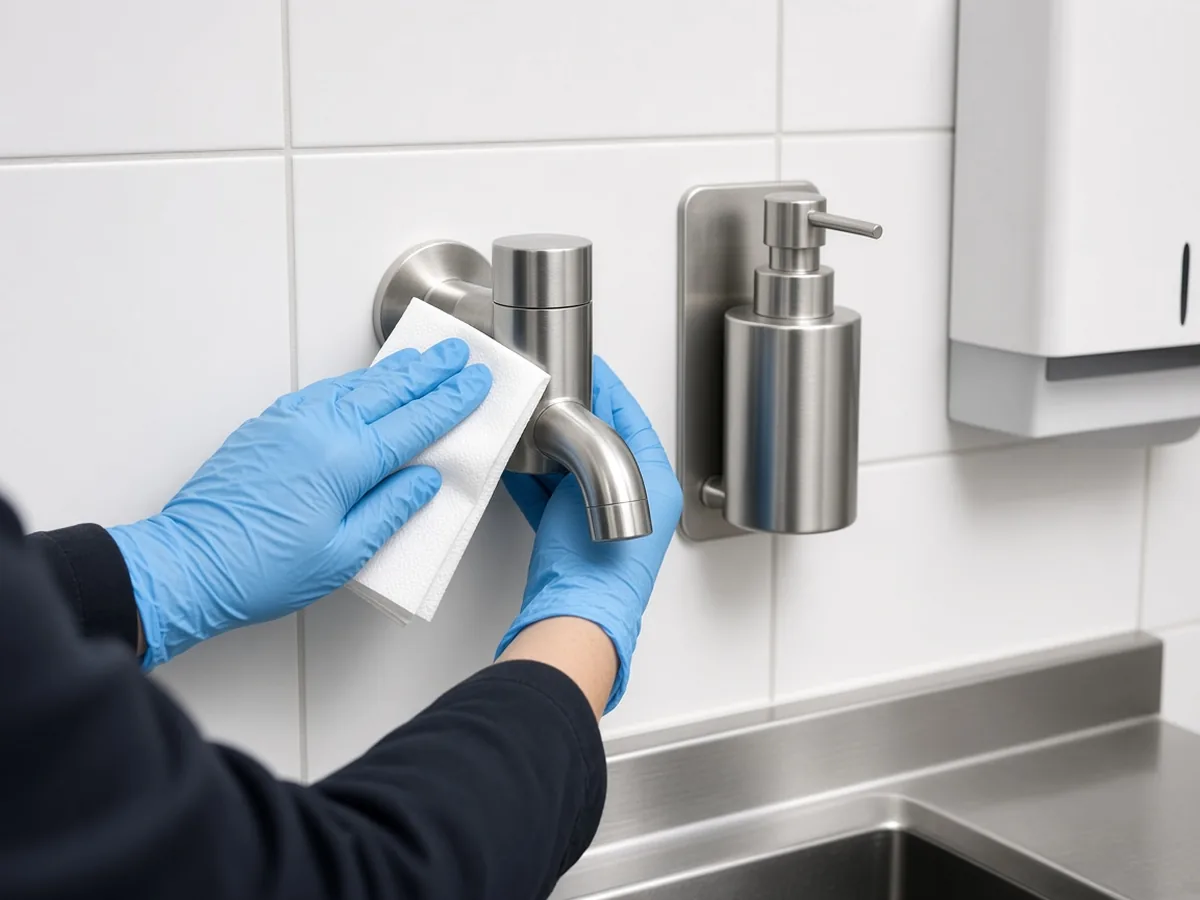
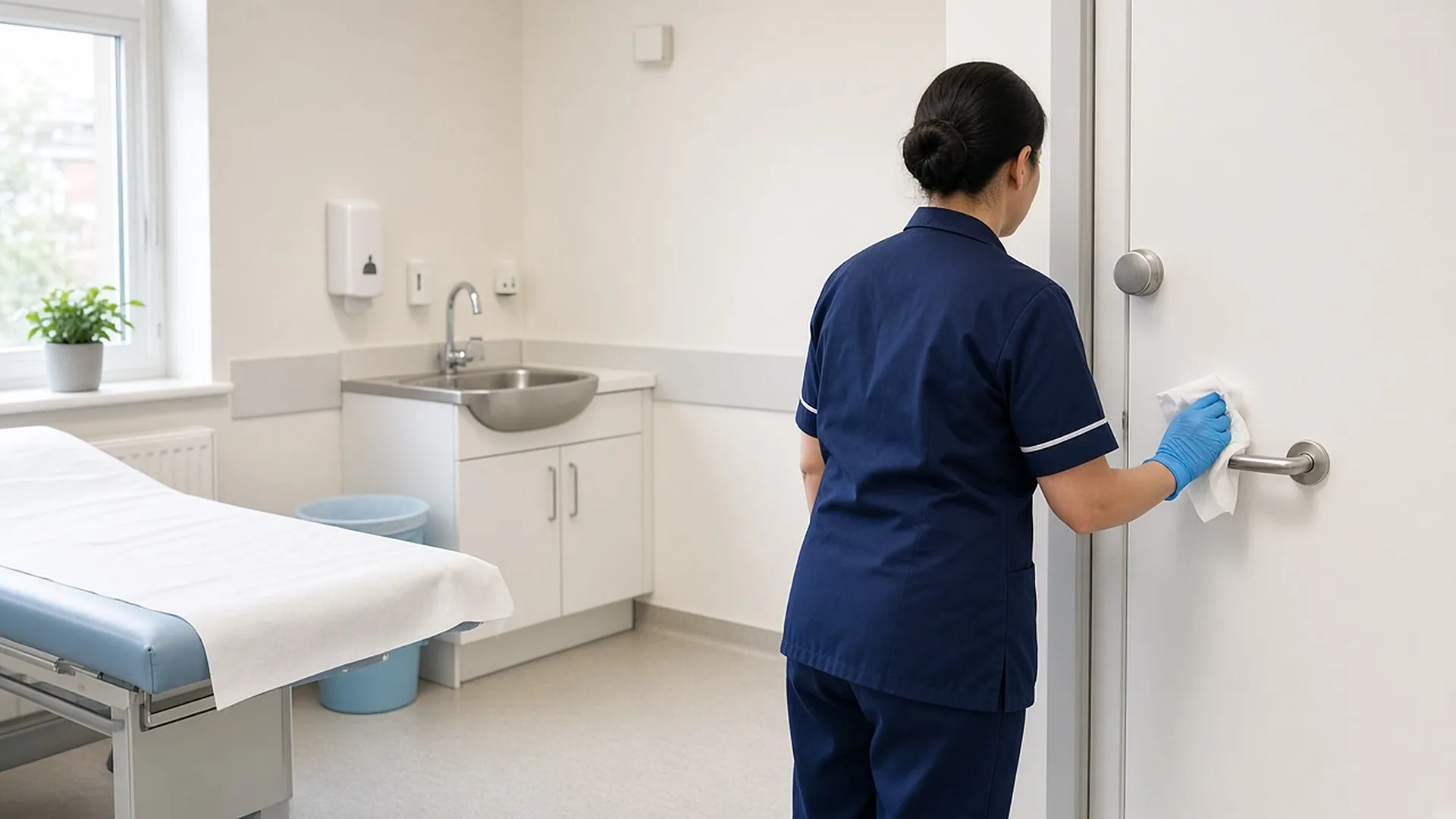
2. Increase cleaning frequency on touchpoints
Norovirus guidance for healthcare settings notes that contaminated fingers can transfer the virus to up to seven clean surfaces in a row[12]. List your high-touch points and clean them more often from October to March:
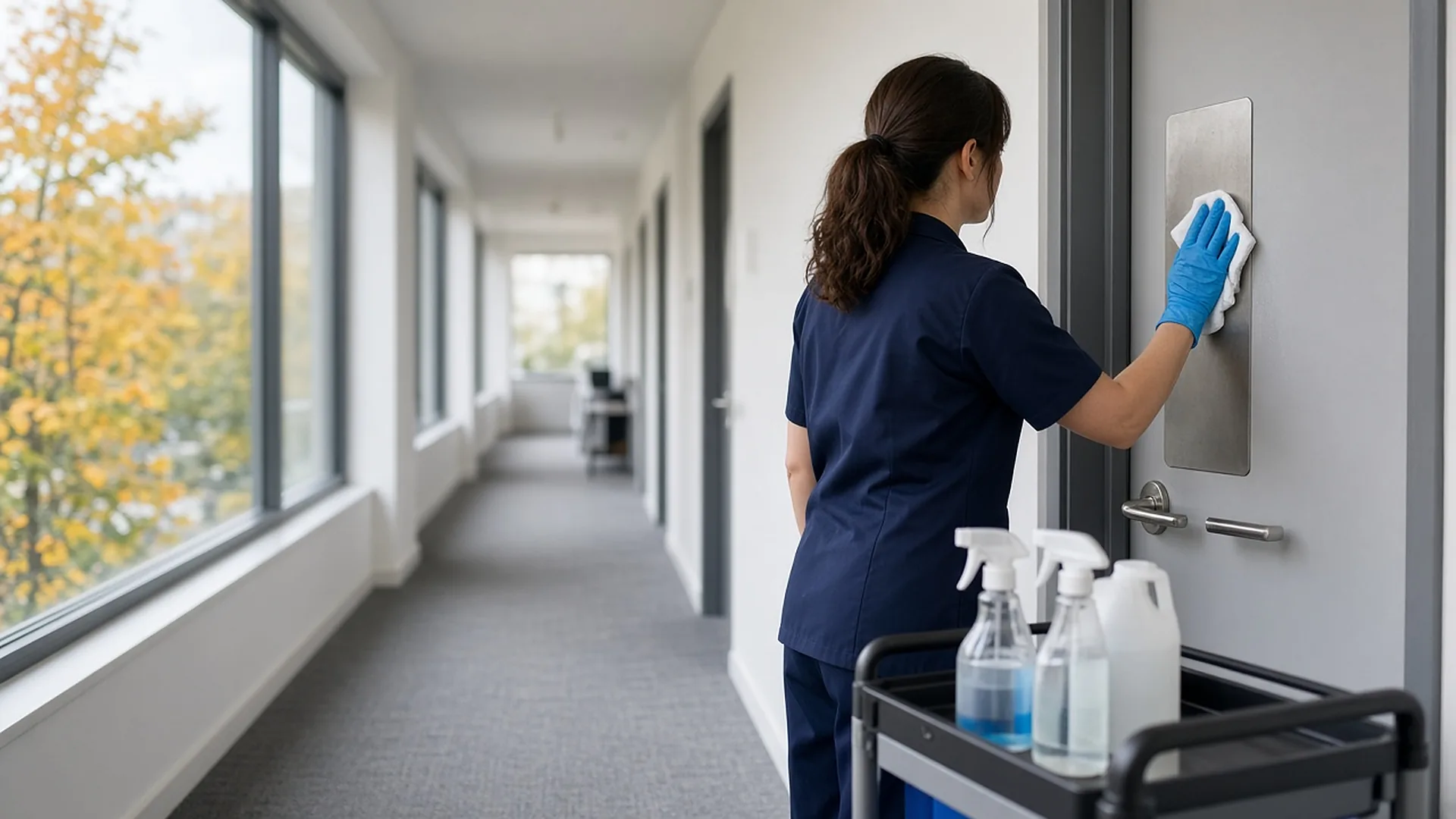
door handles, push plates and access-control keypads
toilet flush handles, toilet seats, taps and washroom door handles
light switches and lift call buttons
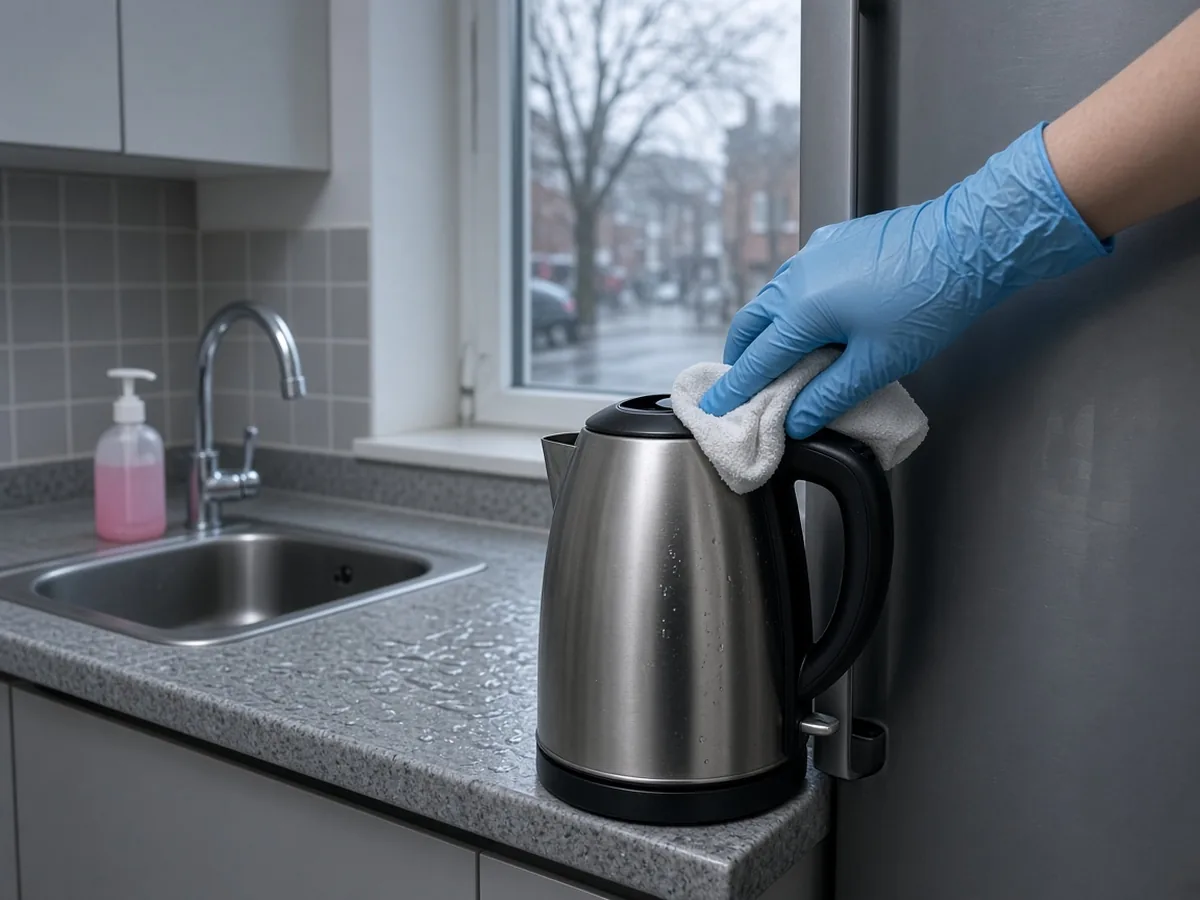
kettle and fridge handles, microwaves, coffee machines and vending buttons
shared keyboards, phones and hot desks
3. Clean first, then disinfect
Disinfectant does not work properly on a dirty surface. National norovirus guidance stresses that removing soiling first is essential, followed by disinfection with 0.1% sodium hypochlorite (1,000 ppm available chlorine), taking account of the manufacturer’s instructions on dilution, contact time and storage [12]. Hypochlorite can damage surfaces with repeated use and should not be used in poorly ventilated areas, so train staff and keep it for suspected norovirus and high-risk areas such as washrooms [12].
4. Have a vomiting incident procedure ready
Vomit and faeces from someone with norovirus are highly infectious, so spills need clearing immediately with the right protective equipment [12]. Put together a simple spill kit (disposable gloves, apron, paper towels, waste bags and a suitable disinfectant) and close the area until it has been cleaned and disinfected.
5. Protect kitchens and food areas
Norovirus spreads easily through food. UKHSA advises that anyone who has had symptoms should avoid preparing food for others until 48 hours after their symptoms have stopped [8]. In staff kitchens, set clear rules on shared food and clean handles and worktops often.
6. Back a clear “stay at home” policy
UKHSA’s advice is not to return to work until 48 hours after norovirus symptoms have stopped [8]. For flu and other respiratory infections, people with a high temperature or who do not feel well enough to work should try to stay at home until they no longer have a temperature [10].
Flu and other winter viruses: what else helps
UKHSA’s workplace guidance on respiratory infections sets out three simple principles: let fresh air in, keep the workplace clean, particularly surfaces people touch a lot, and encourage vaccination [9]. Bringing fresh air into occupied spaces reduces the concentration of respiratory particles [9].
Vaccination makes a real difference. UKHSA modelling estimates that last winter’s flu vaccination programme prevented around 104,000 hospital admissions and 7,100 deaths in England [5].
Winter norovirus and flu readiness checklist
✓Audit washrooms and kitchens: soap, warm water, paper towels and bins in every one.
✓Agree a winter touchpoint list and increase cleaning frequency from October to March.
✓Confirm which disinfectant your cleaners use, its dilution and contact time, and that it is in your COSHH assessment.
✓Stock a vomit and diarrhoea spill kit and brief supervisors on every shift.
✓Publish your stay-at-home rule: 48 hours after norovirus symptoms stop; stay home with a high temperature.
✓Share NHS flu vaccine information and allow time off for appointments.
✓Agree how to call in an extra clean if cases appear.
Minor illness is by far the main cause of short-term absence, named in the top three causes by 78% of organisations [13]. For what that costs UK businesses, see our UK Commercial Hygiene Report.
How Prime Facility Services helps workplaces prepare for winter illness
We are an owner-managed commercial and industrial cleaning company with over 20 years’ experience, working from our Telford headquarters at Halesfield and our Dudley office. We serve clients across Shropshire, Staffordshire and the West Midlands, and into Warwickshire, Worcestershire, the East Midlands and Wrexham. Our quality management system has been accredited to ISO 9001 and ISO 14001 since 2010, and we have held Safecontractor accreditation since 2013.
When winter illness hits, these are the services that matter most:
Targeted deep cleaning and disinfection to reduce the spread of infection. Teams wear the correct PPE, including disposable overalls, masks and gloves, and the site uses NHS-approved disinfectant products.
Delivered in partnership with Infection Control Solutions 24/7, using ionised hydrogen peroxide (iHP) “dry mist” fogging, which is safe to use with electrical equipment left in place, for whole-room or whole-site decontamination.
Tailored plans and flexible daily, weekly or monthly schedules. These include attention to high-touch areas and regular disinfection of desks, keyboards and door handles, backed by regular quality checks.
Trained, supervised and DBS-checked teams, with digital cleaning audits and digital time and attendance tracking, so you can see that extra winter rounds are actually delivered.
✓a touchpoint regime agreed for your site, covering door plates, washrooms, kitchens and shared equipment
✓extra washroom and kitchen rounds during working hours in peak weeks, using flexible scheduling
✓colour-coded cloths and equipment, so washroom kit never ends up in kitchens or offices
✓a briefed response for vomiting incidents, with the right PPE and products on site
✓a targeted deep clean and disinfection of affected areas after an outbreak, before teams return
Every plan is built around your building, headcount and opening hours. Products can be matched to the guidance above, such as a chlorine-based disinfectant where norovirus is suspected.
Norovirus and flu are both at expected or baseline levels in mid-October 2026, but last winter norovirus reports peaked at 627 a week in January (UKHSA).
Alcohol gel does not kill norovirus. Soap and warm water does.
Clean first, then disinfect with a bleach-based product (typically 1,000 ppm chlorine) where norovirus is suspected.
Flu germs can live on hands and surfaces for 24 hours, so touchpoint cleaning helps against both viruses (NHS).
Frequently asked questions
How do you prevent norovirus in the workplace?
Make soap-and-water hand washing easy, clean frequently touched surfaces more often over winter, clean and then disinfect with a bleach-based (chlorine) product where norovirus is suspected, have a procedure for vomiting incidents, and ask staff with symptoms to stay at home until 48 hours after their symptoms have stopped.
Does hand sanitiser kill norovirus?
No. UKHSA and the NHS both advise that alcohol-based hand gels do not kill norovirus. Washing hands with soap and warm water is the reliable option, particularly after using the toilet and before eating or preparing food.
How long should staff stay off work with norovirus?
UKHSA advises people not to return to work until 48 hours after their symptoms have completely stopped, and to avoid preparing food for others during that time, because they may still be shedding the virus.
What disinfectant kills norovirus?
UKHSA’s typical recommendation is a bleach-based solution of 0.1% sodium hypochlorite (1,000 parts per million available chlorine) for surfaces, used after visible soiling has been cleaned off and in line with the manufacturer’s instructions on dilution and contact time.
When is norovirus season in the UK?
Norovirus can be caught at any time of year, but activity rises every winter. In the 2025 to 2026 season, weekly positive laboratory reports in England peaked at 627 in the week beginning 12 January 2026, according to UKHSA.
Can a cleaning company help after a norovirus outbreak at work?
Yes. A professional cleaning company can carry out a targeted deep clean of the affected areas, concentrating on washrooms, kitchens and shared touchpoints, cleaning first and then disinfecting in line with national norovirus guidance. Prime Facility Services provides deep cleaning and disinfection for commercial and industrial sites across Shropshire, Staffordshire and the West Midlands. Call 0800 566 8894 to discuss your site.
Winter Norovirus and Flu: How to Prevent Outbreaks in the Workplace
Last winter, norovirus reports in England peaked at 627 a week in January, and flu took off in late October. Here’s how norovirus and flu spread at work, why hand gel isn’t enough, and the cleaning steps that make the biggest difference.
Daytime Cleaning and Energy Bills: Can Changing Your Cleaning Schedule Cut Building Costs?
Non-domestic electricity averaged 24.51p per kWh in Q2 2026, and lighting alone accounts for 15.5% of office electricity use. Moving cleaning into the working day can cut the hours a building runs. Here’s how to work out whether it adds up for you.
Void Turnaround Times: Why Every Day Empty Costs Housing Providers
The median social home in England now stands empty for 30 days between tenancies, up from an average of 21 days before the pandemic. Here’s what the latest government and regulator data says about void times, rent loss and demand, and where days can be won back.
National Standards of Healthcare Cleanliness 2025 Explained for GP Surgeries and Dental Practices
The National Standards of Healthcare Cleanliness 2025 replaced the 2021 version and apply to all healthcare organisations. Here’s what functional risk categories, audit target scores and star ratings mean for a GP surgery or dental practice.